Tuesday, August 27, 2013
Monday, August 26, 2013
Necessary climbing gear
Once you've done the training...
The minimum necessary kit:
For the climber: rope, harness, locking carabiner, chalk bag & chalk ball.
For the belay person: harness, belay device, locking carabiner (a carabiner is also called a 'biner').
Building up to necessary extras, depending on the circumstances, including: Helmet, chest harness, extra carabiners (locking and spring-gate), tape slings, prusik cord in various lengths (1m, 1.5m, 2m), more climbing rope, climbing shoes, gloves, daisy chain, bags for carrying it all.
My stuff:
More notes on essential knowledge:
The minimum necessary kit:
For the climber: rope, harness, locking carabiner, chalk bag & chalk ball.
For the belay person: harness, belay device, locking carabiner (a carabiner is also called a 'biner').
Building up to necessary extras, depending on the circumstances, including: Helmet, chest harness, extra carabiners (locking and spring-gate), tape slings, prusik cord in various lengths (1m, 1.5m, 2m), more climbing rope, climbing shoes, gloves, daisy chain, bags for carrying it all.
My stuff:
- Rope: 10.0 Vertex classic blue (Mammut), 40m, 10mm dia, rated for 8-9 UIAA falls, 8.9kN impact force, 6.5% elongation in use, 31% elongation at 1st fall, 0mm sheath slippage, 36% proportion of sheath, article no. 2010-01630-0150. Suitable for all-round gym and sports climbing.
- Harness: x1 Black Diamond Momentum AL climbing Harness, large (waist 33" to 36").
- Harness: x1 Black Diamond Primrose AL climbing Harness, small (waist 27" to 30").
- Belay devices: 2x DMM Belay Bug, can be used with ropes of 8.5mm - 11mm diameter.
- Asymmetrical Locking carabiners: 1x DMM locking connector & belay master. 1x Mammut HMS Element screw gates.
- Slings: 2x DMM nylon slings, 16mm x 1.2m. 2x Lyon 25mm polyamide anchor sling 120cm
- Symmetrical "D" style locking carabiners: 1x Petzl/OK Oval Screwgate)
- Pulley: 1x Petzl sheave (for use with a symmetrical "D" style carabiner only).
Notes on what the stuff is:
- Parts of the climbing harness include: belay loop, tie-in points (waist and leg), waist band/belt/webbing, leg loops, rear straps, gear loops, buckle/staps on waist band and leg loops.
- Parts of a carabiner include: gate, nose, lock, major axis, minor axis. Never 'cross-load' the carabiner along the minor axis.
- Parts of a belay device include: face plate, slots (usually two, 1 per rope, to allow for double ropes), wire loop for clipping-in, which also acts to identify the feed-in side (face plate) and the locking side (friction side). A belay device is used with a carabiner clipped into the loop (and the rope) on the friction side.
- Any anchorage point is called a 'belay'.
More notes on essential knowledge:
- The harness waist band must be worn above your hips, i.e. fit around your waist.
- The harness leg loops must we worn at the top of your inner thighs.
- Tighten the buckle/straps on the waistband and leg loops.
- The harness buckle/straps should be adjusted tight enough such that you can skip two fingers between the waist band and your waist.
- If fixing or tying yourself into one end of the rope, tie in through both tie-in points (waist and leg), not into the belay loop. Your climbing partner (anchored), called the belayer, will remove slack from this safety line in case the climber falls, in which case the fall will be limited to the slack length to the next anchor.
- Climber ties in to the end of the rope using a double figure-of-eight knot.
- The belayer, should in turn be tied into a safe anchor point through his/her own tie-in points (both) with one rope. The belayer belays through their own belay device using the rope tied to the lead climber.
- IN A RESCUE SITUATION: For rescue you would use a carabiner at the end of a lifeline to clip directly into the belay loop for winch rescue e.g. via a helicopter rescue hoist.
- Seat harness does not act to keep the climber upright and cannot keep an unconscious climber upright, in which case a chest harness is also needed.
- A carabiner is used to clip the belay device into the belay loop of a climbing harness only, not the harness's tie-in points.
- Never clip or tie into harness gear loops or rear straps; they are not load bearing.
- The correct loaded orientation for a carabiner is along the major axis, fat end away/above.
- A belay device acts in conjunction with a carabiner to produce a tight bend in the climbing rope, as a friction brake to slow or stop a climbing rope.
- A belay device works by introducing controllable rope friction linking the rope to the belay point (anchorage point or belay person).
- The belay person clips into both the belay device wire loop and the rope fed through the belay device from the carabiner attached to his/her harness; the rope must not cross over the wire loop.
- The belay person must lock the carabiner gate clipped into the belay device.
- The belay person arranges the narrow end of a locking carabiner into the belay loop of his/her own harness.
- The rope must not cross over the loop wire of the belay device.
- Carabiner clipped into a sling anchor should produce an accute angle (90 degrees or less).
- Never tie an overhand knot in a sling.
- Never join a rope directly to a sling! Use a carabiner to connect the two.
On controlled descent, abseiling or rappelling
- A belay device can also be used by the climber for controlling descent down a fixed rope, i.e. for abseiling or rappelling.
- The climber clips his/her belay device by carabiner into the belay loop for controlled descent down an separate anchored abseiling rope (i.e. for abseiling or rappelling) .
- A double rope system should be used for controlled descent, this implies a separate anchored abseiling rope (i.e. for abseiling or rappelling). The first rope is tied into the climber (figure-of-eight) and controlled by a belay person at the climb base. The second anchored rope is for descent controlled by the climber using his/her own belay device.
What Knots to Know (in order of need)
- Figure of Eight (follow through) - for tying into the harness tie-in points (waist and leg).
- Figure of Eight (double loop) - for anchoring rope without need to thread an end.
- Double Fishermans - for making a Prusik loop.
- Prusik - a slide and grip knot for loading the climbing rope.

Thursday, August 8, 2013
Studio One: Higgins Design: Modular Bush House
Queensland designer Kevin Higgins has produced a modular prefabricated and easily transportable Bush House titled 'Studio One'.
The passively cooled Studio One creates an elegant light filled space that seems to float above the forest floor. This is architecture that imposes a minimal impact on the environment both in terms of installation and use.
Envisioned as artists retreat attuned to the Australian climate the Studio was designed and created in the Eumundi hinterland of Queensland's Sunshine Coast. The Studio is designed to accommodate one or two people in tropical comfort; taking just one day to erect and if needed, a day to disassemble to transport to another location. The Studio can be bought as a 'build to lock-up and first-fix' or in kit form for self-assembly.
Throughout his career Higgins has adapted Japanese post-and-beam construction methods to produce lovingly crafted joinery in Australian hardwood, balancing the use of both natural and manufactured materials to make dwellings in perfect tune with the Australian climate.
The passively cooled Studio One creates an elegant light filled space that seems to float above the forest floor. This is architecture that imposes a minimal impact on the environment both in terms of installation and use.
 |
| Studio One: Modular Bush House |
Throughout his career Higgins has adapted Japanese post-and-beam construction methods to produce lovingly crafted joinery in Australian hardwood, balancing the use of both natural and manufactured materials to make dwellings in perfect tune with the Australian climate.
Friday, June 21, 2013
Getting a tablet into my cat...
So how do I get my cat to take his worm tablets! We've tried wrapping the tablet in ham, in smoked salmon, hiding it in steak, to no avail. Leo deftly eats around the offending article or discovers it in his mouth and carefully spits it out, again and again.
I feel the only choice is the grab and insert technique, they way the Vet does it so seamlessly where the cat seems almost willing, grab, spread the jaw and place the pill at the back of his throat. Like so.
Just so, but first, let's see what the Internet says... Give a cat a pill
I feel the only choice is the grab and insert technique, they way the Vet does it so seamlessly where the cat seems almost willing, grab, spread the jaw and place the pill at the back of his throat. Like so.
Just so, but first, let's see what the Internet says... Give a cat a pill
Wednesday, June 5, 2013
Sourcing a prism for a camera lucida
So this little exercise records my attempts at recreating a camera lucida for a budding artist. I was inspired to do this after briefly sponsoring the NeoLucida kickstarter project (link). Unfortunately the price point for shipment to Europe was quite high; shipping costs accounting for a large part. But the idea stayed and so I figured I could source the central element locally. A small glass prism. Sounds simple (that's what Oisin said)... The essential design elements as below (from Wikipedia)

Thus began a small voyage of discovery as I sought to uncover who, in Ireland, has the skills and tools, to work with glass.
Some remaining possibilities:
Out of consideration.
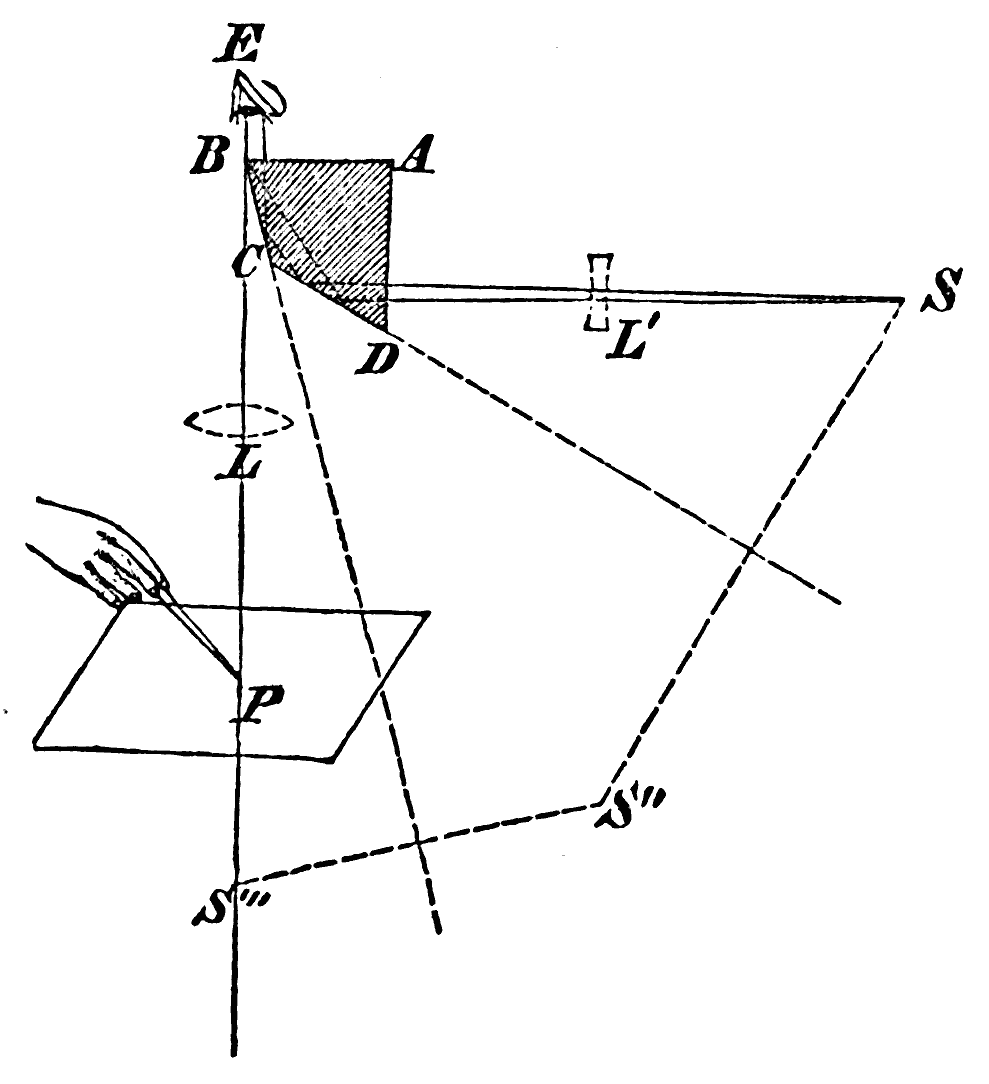
Thus began a small voyage of discovery as I sought to uncover who, in Ireland, has the skills and tools, to work with glass.
Some remaining possibilities:
- Blackrock Glass, a local glassier known for custom cutting glass shelves and the like (link)
- Jerpoint Glass, an artisan glass studio in Kilkenny (link)
- Karl Harron Studio in Strangford (link)
- The Glass Society of Ireland (link)
- and perhaps other artisans through Craft Ireland (link)
Out of consideration.
- Dublin Crystal (link)? No, they source their stock from international suppliers, they only cut and engrave in Dublin.
- Heritage Crystal in Waterford (link)? Similar story except they do blow glass and cut it into crystal but the production director wasn't interested in doing anything bespoke like this.
- Scholer Crystal from Austria? One of Europe's biggest contract crystal products producers (link) but they don't really do bespoke.
Monday, April 29, 2013
Updating the minecraft.jar file on a Mac
So the Minecraft files on a Mac are stored in
An easy way to get there is, from the Finder > Go > Go to folder; and enter "/Users/myname/Library/Application Support/minecraft/bin".
Another way is to use the Finder shortcut "cmd+shift+G", and enter "/Users/myname/Library/Application Support/minecraft/bin".
Anyway, the above gets you to the installation folder.
To install the minecraftforge mod pack access the latest .jar and launch it. The new installer finds your Minecraft files and unpacks/downloads the files to the right location.
The following notes applied to pre-1.5.2 Minecraft...
Pointers:
http://docs.oracle.com/javase/tutorial/deployment/jar/update.html
http://minecraftformac.tumblr.com/post/19686390830/unjarrejar
~/Library/Application Support/minecraft/In the command sequence below you can see the space " " in Application Support is actually present but represented by the forward slash escape sequence to force the space to be read in at the command line).
An easy way to get there is, from the Finder > Go > Go to folder; and enter "/Users/myname/Library/Application Support/minecraft/bin".
Another way is to use the Finder shortcut "cmd+shift+G", and enter "/Users/myname/Library/Application Support/minecraft/bin".
Anyway, the above gets you to the installation folder.
To install the minecraftforge mod pack access the latest .jar and launch it. The new installer finds your Minecraft files and unpacks/downloads the files to the right location.
The following notes applied to pre-1.5.2 Minecraft...
cd ~/Desktop
mkdir ADD_MOD_FILES_HERE
cd ADD_MOD_FILES_HERE
jar xf ~/Library/Application\ Support/minecraft/bin/minecraft.jar
rm META-INF/MOJANG_C.*
ADD_MOD_FILES_HERE$
jar uf ~/Library/Application\ Support/minecraft/bin/minecraft.jar *
Pointers:
http://docs.oracle.com/javase/tutorial/deployment/jar/update.html
http://minecraftformac.tumblr.com/post/19686390830/unjarrejar
Sunday, April 7, 2013
Home energy saving measures.
Our annual usage 2017-18:
3,172 kWh - electricity from 8-Jun-2017 to 16-Jun-2018
7,049 kWh - gas from 8-Jun-2017 to 16-Jun-2018 (635m3 x 11.1 conversion factor)
Compared to a typical national market estimate for an average household of 5,300kWh electricity and 13,800kWh (source: bonkers.ie)
Our annual usage 2015-16:
3,024 kWh - electricity from 23-Jul-2015 to 21-Jul-2016
6,100 kWh - gas from 22-Dec-2015 to 22-Dec-2016
Use the SEAI BEH self assessment survey (link). Result: No recommendations. The house already has:
Checklist the SEAI credits list (pdf file, link).
Own plan as follows:
Our goal, perhaps unrealisable, is to get near the Passivhaus requirement for energy-consumption of 120 W/m²/K.
References:
Passive House on Wikipedia (link)
W/m²/K is Watts per square metre per kelvin; see Wikipedia on thermal transmittance (link)
3,172 kWh - electricity from 8-Jun-2017 to 16-Jun-2018
7,049 kWh - gas from 8-Jun-2017 to 16-Jun-2018 (635m3 x 11.1 conversion factor)
Compared to a typical national market estimate for an average household of 5,300kWh electricity and 13,800kWh (source: bonkers.ie)
Our annual usage 2015-16:
3,024 kWh - electricity from 23-Jul-2015 to 21-Jul-2016
6,100 kWh - gas from 22-Dec-2015 to 22-Dec-2016
Use the SEAI BEH self assessment survey (link). Result: No recommendations. The house already has:
- Solar hot water heating for hot water cylinder.
- High efficiency condensing gas boiler system for primary heating and hot water.
- > 4 inches of glass fibre ceiling insulation in the attic.
- Mixed Solid Wall and Hollow Block and Timber Frame construction.
Checklist the SEAI credits list (pdf file, link).
Own plan as follows:
- Replace halogen low voltage MR16 bulbs/transformers with GU10 high efficiency LED bulbs on direct 240v supply.
- Fit additional ceiling insulation in the attic.
- Complete upgrade of windows and front door (street side, North facing).
- Fit shutter blinds to internal window frames.
- Computer logging of internal temperature, electricity supply, weather station data.
- Conduct thermal survey of the house.
Our goal, perhaps unrealisable, is to get near the Passivhaus requirement for energy-consumption of 120 W/m²/K.
References:
Passive House on Wikipedia (link)
W/m²/K is Watts per square metre per kelvin; see Wikipedia on thermal transmittance (link)
Subscribe to:
Posts (Atom)